Beginner's Guide to Buying a Log Burner for a Small UK Living Room
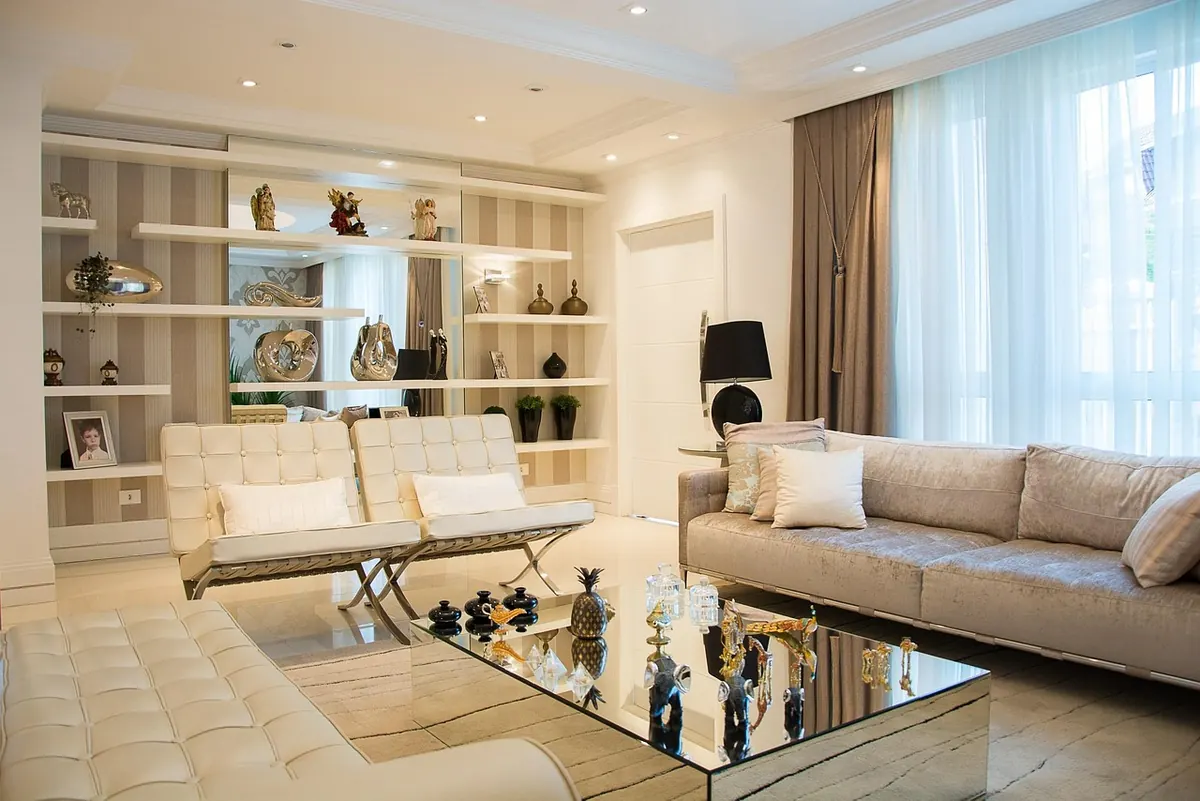
A log burner can turn a small living room into the best seat in the house. Choose badly and you get a hot box that overheats the sofa, blackens its own glass and eats through your wood supply. The difference comes down to three things: heat output, clearance distances and the flue.
Here's what actually matters when you're buying for a compact UK living room — whether you already have a chimney breast and an old fireplace, or nothing but a solid outside wall.
Work out the heat output before you fall for a stove
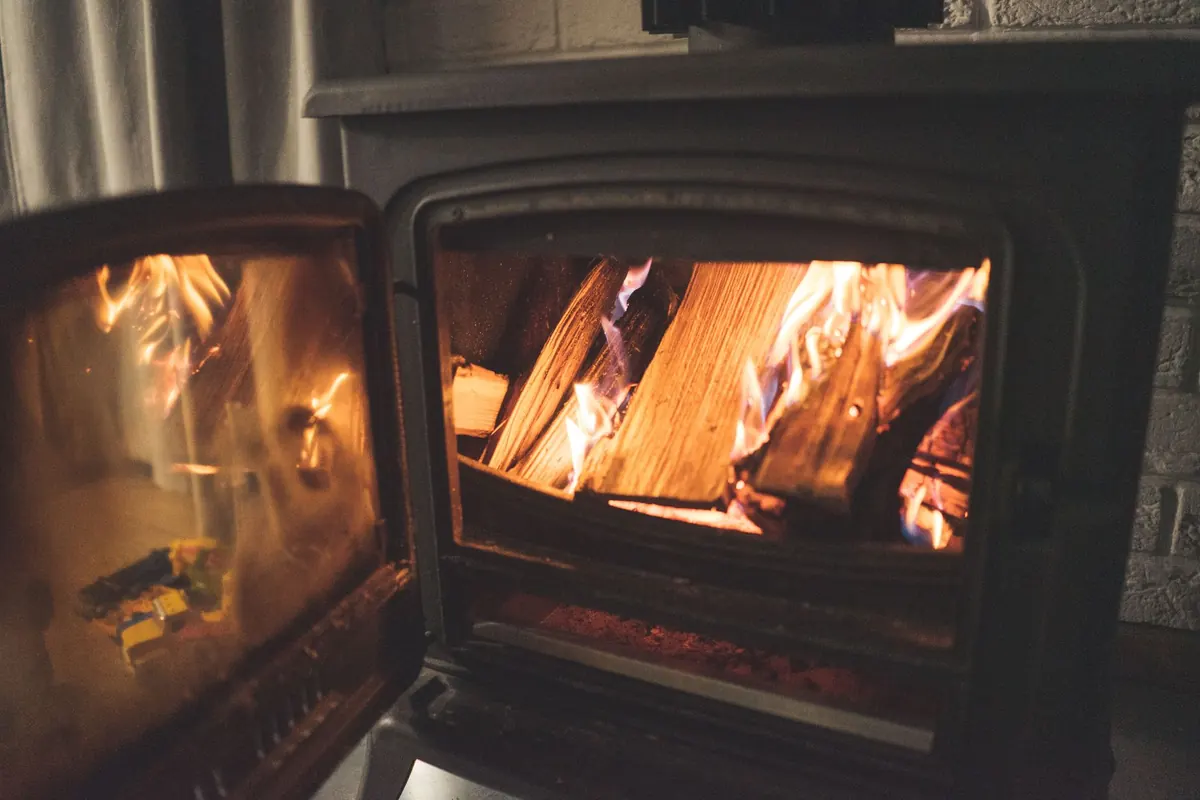
Stoves are rated in kilowatts, and that number matters more than the styling. Too small and it won't heat the room on a cold night. Too big and it spends its life throttled back, smouldering instead of burning — which sends tar up the flue, coats the glass and fills the chimney with creosote, while delivering fierce, uncomfortable bursts of heat.
As a rough starting point, allow about 1 kW for every 14 cubic metres of room volume in a reasonably insulated home. A 4m by 4m room with 2.4m ceilings is around 38 cubic metres, suggesting roughly 3 kW. In practice most wood stoves start at 4 kW, and 4 to 5 kW suits a typical small UK living room.
Adjust upwards for draughty, single-glazed or open-plan spaces, and downwards for airtight, well-insulated rooms. If your estimate comes out at 3 kW but the smallest model you like is 5 kW, look for a wide air-control range rather than a bigger firebox.
Clearances: the numbers that decide whether it fits
Every stove has declared minimum distances to combustible materials — to the rear, to each side, sometimes to the front. They range from around 100 mm to 450 mm depending on the model and whether heat shields are fitted. Treat them as fixed. A timber stud wall behind a skim of plaster still counts as combustible, however solid it looks.
Check these before you commit to a position:
- Rear and side clearances for your specific model, with and without shields.
- What's inside the wall — brick and stone behave differently from studwork and plasterboard.
- The hearth. Building Regulations call for a non-combustible hearth, typically extending at least 150 mm to each side and 300 mm in front of the appliance, with the construction and thickness depending on the floor beneath. On timber floors that usually means solid construction with an insulating layer, not a decorative slab laid on the boards.
- Working room: door swing, ash removal, log loading, and somewhere to stand.
Approved Document J, or its Scottish and Northern Irish equivalents, sets the detail here, and your installer will confirm the exact figures for your room.
DEFRA exemption and smoke control areas
Much of urban Britain sits inside a smoke control area. In one of those, you may only burn authorised smokeless fuels unless your stove appears on the DEFRA list of exempt appliances. Buy a non-exempt stove in a smoke control area and you can't legally burn wood in it.
Two points worth understanding:
- Ecodesign compliance is not the same as exemption. New stoves sold in the UK must meet Ecodesign emissions standards, but that doesn't automatically make them legal for wood in a smoke control area. Check the DEFRA list as well.
- Exemption is model-specific. Two near-identical stoves from the same range can differ, so check the exact name and number.
Confirm your postcode's status with your local council and check the current DEFRA list before buying. Rules on what can be burned have tightened, with restrictions on the sale of wet wood and traditional house coal in England, so it's worth checking current guidance rather than relying on what was true a few years ago.
Whatever the rules where you live, seasoned wood under 20 per cent moisture is the baseline. Look for the Ready to Burn mark, or split a log and test it with a moisture meter.
Flue options for compact spaces
The flue is where small rooms usually surprise people. It must never be narrower than the stove's outlet, it must be insulated, and it must be tall enough to draw — as a rule of thumb, at least 4.5 m from the top of the appliance to the terminal, sited clear of windows, vents and roof surfaces.
Working with an existing chimney
The usual approach is a flexible stainless steel liner, insulated with wrap or vermiculite, finished with a register plate and a cowl. It's tidy and it keeps the stove in the traditional spot. The chimney needs to be structurally sound and swept before the liner goes in.
No chimney: twin-wall system flue
You'll need a twin-wall insulated stainless steel system flue, run either internally up through the room or externally up an outside wall. Internal runs take floor space but keep heat in the room and can be boxed in with ventilation. External runs free up the corner but need more insulation. A rear flue exit, with the pipe leaving the back of the stove and turning upwards, is often the neatest option in a shallow room.
Keep bends to a minimum. Two 45-degree offsets work better than a single 90-degree turn, and a 125 mm outlet can be adapted up to a larger liner — never the other way round.
Formats that suit a small room
Once the numbers are settled, format matters as much as style.
- Inset or cassette stoves sit into a recess and take up almost no floor space, provided the opening is large enough for clearances and the flue connection.
- Slimline freestanding stoves are shallow front to back, which helps in a room you still need to walk through.
- Convection stoves have a double skin that draws cool air in low and pushes warm air out high. The casing runs cooler, clearances are often smaller, and the heat is gentler than from a purely radiant stove.
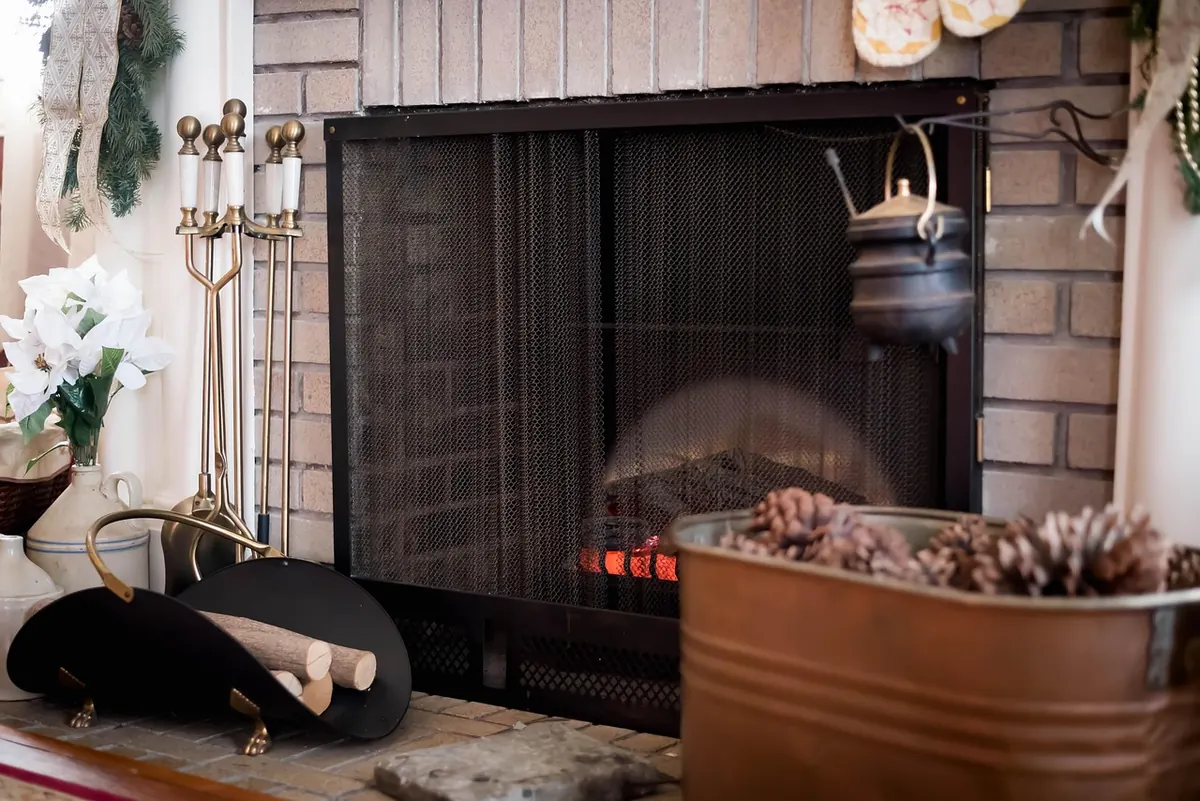
Decide where the wood will live, too. A basket beside the hearth looks charming; a week's logs stacked against the stove does not.
Before you buy: a short checklist
- Check your smoke control status with the council, and confirm the stove's exemption if you need it.
- Measure the room and the alcove, including ceiling height, and photograph the space for your installer.
- Find a HETAS-registered installer before choosing the stove. They'll size the appliance, plan the flue route and handle Building Regulations notification. Many supply and fit, which is usually simpler than buying separately.
- Budget for the whole job. The flue, hearth and labour are typically a substantial part of the total cost, not an afterthought.
- Plan the practical side. A carbon monoxide alarm in the same room is required for solid fuel appliances, and the chimney should be swept at least once a year — more often with heavy use.
Get the output, clearances and flue right, and the rest is choosing which chair you'll be sitting in. Where Building Regulations, smoke control rules or flue calculations are involved, take advice from a registered installer or your local building control team before you commit.
Photo: leemelina08 / Pixabay